
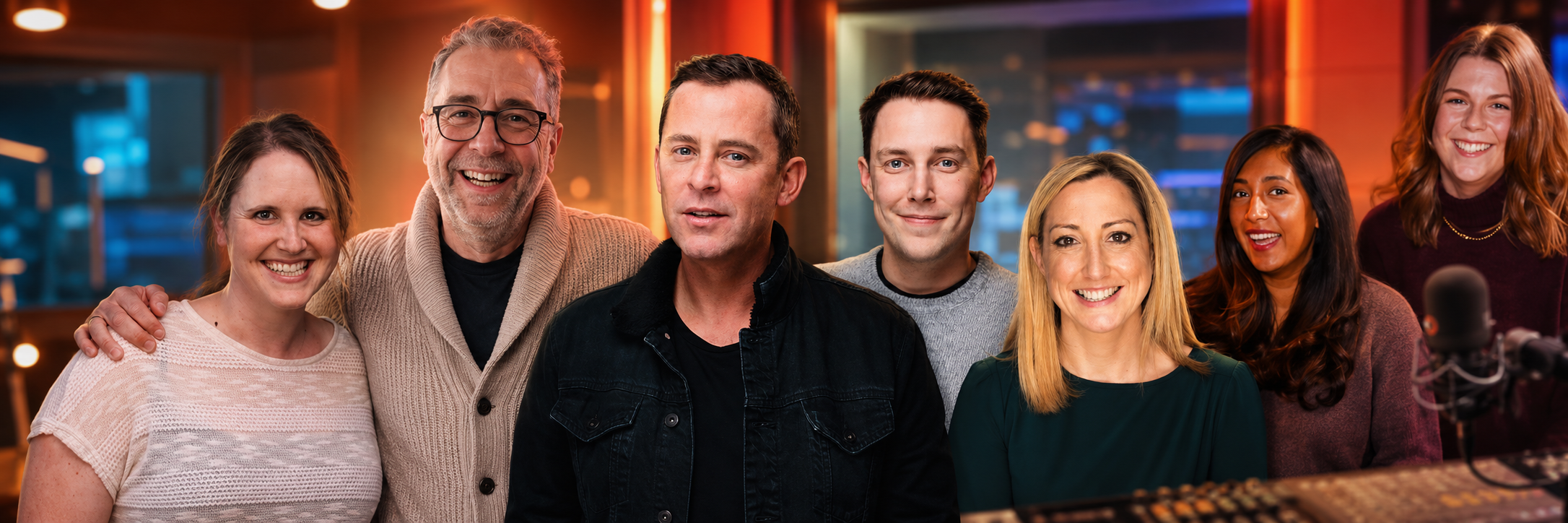

Chris hated smiling with his teeth
Chris admitted something Scott already knew from years of publicity photographs.
He did not like his teeth.
When cameras appeared, Scott could smile properly.
Chris tended to close his mouth.
The insecurity went back to school.
That meant an online video immediately caught his attention.
Someone had bought cheap clip-on or mould-at-home veneers for roughly £15.
The product was softened or fitted in a way similar to a mouth guard and then worn over the existing teeth.
Chris wondered whether this could give him the smile he wanted without paying for expensive dental treatment.
Dentists were horrified
The listeners with dental qualifications responded almost immediately.
One dentist messaged to say DIY dentistry filled them with horror.
Scott agreed the online result did not look especially natural.
The fake teeth appeared much larger and whiter than the wearer’s original smile.
Chris still understood the appeal.
Proper cosmetic dentistry could cost a great deal.
A £15 product promised an instant transformation.
The show stopped short of recommending it.
The dentist reaction had made the risk clear enough.
Doing Bits went to Ibiza
The programme also revived Doing Bits, a game inspired by Love Island language.
A member of the team approached strangers and made small talk before asking the deliberately personal question:
“Did you do bits last night?”
Scott and Chris then tried to decide, from the person’s answer and voice alone, whether they had.
This edition took the game to Ibiza, where Radio 1 had just staged its annual weekend.
A holiday crowd gave the question exactly the environment the feature needed.
Scott discovered the world of hand models
Then came a Channel 5 programme about professional hand modelling.
Scott had never seriously considered that the hands in close-up advertising shots often belonged to specialist models rather than the celebrity whose face appeared elsewhere in the campaign.
One of Britain’s best-known hand models, Nina Taylor, described herself as a supermodel of hands.
She had worked for around 20 years.
At the top of the profession, she could earn up to £5,000 for a day’s work.
Scott immediately looked down at his own hands and wondered whether he had been ignoring a second career.
Chris was sceptical.
Hands could be more valuable than faces
The discussion widened into the strange pressures of the job.
A professional hand model had to protect nails, skin and fingers in a way most people never considered.
Even an ordinary cut or broken nail could interfere with work.
Scott became fascinated by the idea that somebody could appear in major advertising campaigns while remaining completely anonymous because only their hands were visible.
He decided his own hands needed professional assessment.
Tuesday would bring the verdict.

COMMENTS